UX Conversion Pattern Test: Does CTA Type Scale Lift Trial Signups?
A grounded look at CTA typography changes that improve sign-up clarity without turning the interface into a field of oversized buttons.
- Mapped CTA type-scale changes to the surrounding hierarchy so button emphasis is evaluated in context.
- Defined when larger, heavier CTA labels improve clarity and when they merely compete with headings and supporting copy.
On this page
When teams test CTA styling, they often change too many variables at once: button color, radius, copy, spacing, and iconography. That makes it impossible to learn whether typography itself improved the interaction. A cleaner test isolates label size, weight, and spacing while the rest of the component stays stable.
What larger CTA type actually changes
Increasing label size can improve scanning if the rest of the interface already has a clear hierarchy. Users locate the action faster because the label claims slightly more visual space. But the benefit disappears when headings, pricing, and proof points are already oversized. In that environment, the CTA becomes one more loud object.
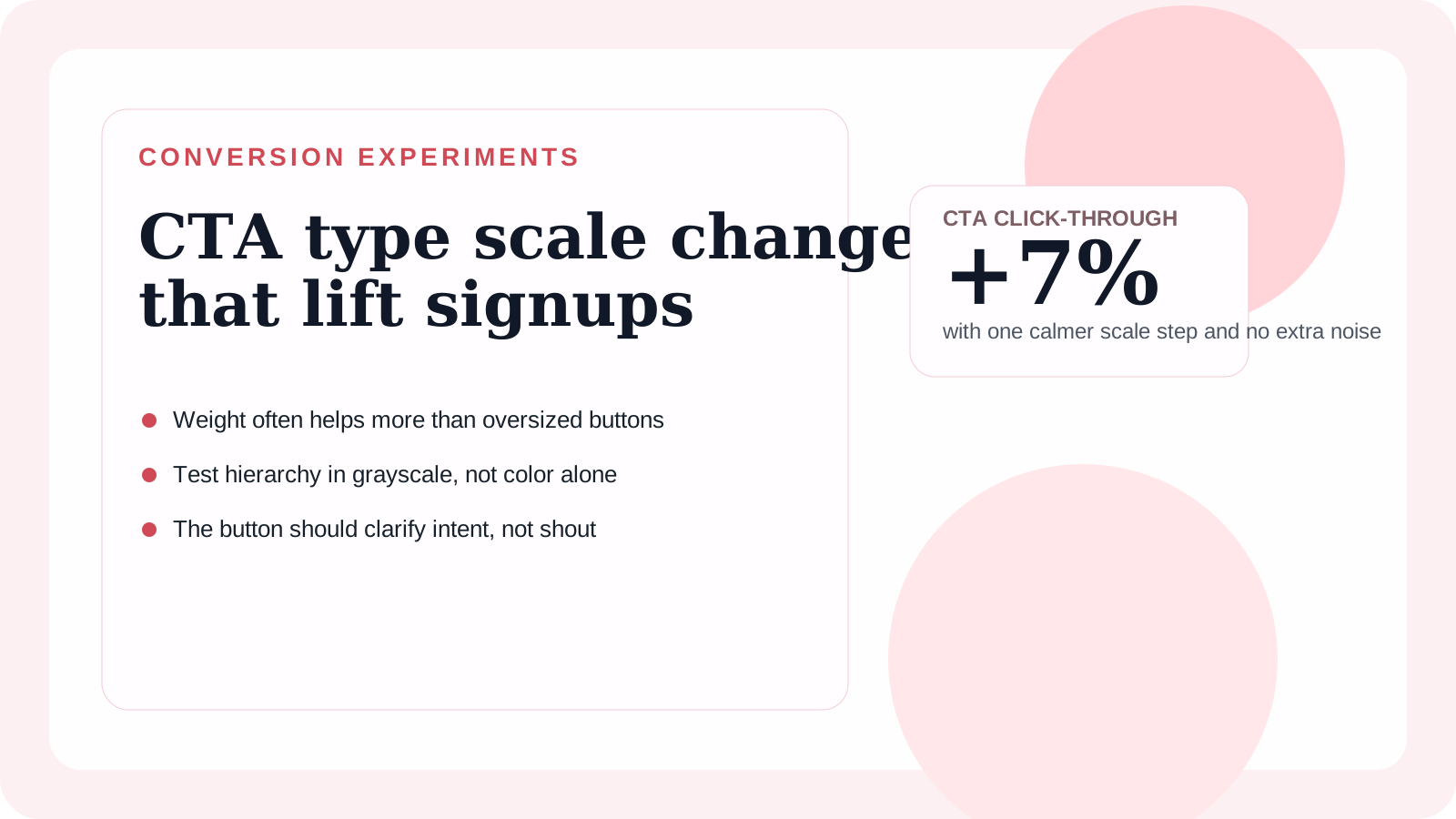
Weight can be more useful than size alone. A modest shift from medium to semibold often improves recognition without forcing the button to grow and crowd the layout.
Test matrix
| Change | Best use case | Main risk |
|---|---|---|
| +1 size step | Dense pricing or signup sections | Can overpower nearby helper text |
| Weight increase only | Clear layouts with restrained copy | Subtle if button contrast is already weak |
| Added tracking | Rarely useful | Hurts word shape in short labels |
| All three together | Only for campaign hero CTAs | Creates unnecessary visual shouting |
The most reliable winners are usually the smallest possible changes that improve recognition without changing the overall rhythm of the screen.
How to judge the result
Look at pre-click behavior, not only clicks. If users hover longer, re-read surrounding copy less often, or move more directly from benefit statement to action, the CTA typography is doing useful work. If the larger label increases clicks but also increases abandonment later, the button may be overpromising or simply distracting.
It helps to review the entire section in grayscale. If the CTA remains obviously primary without relying on color, the hierarchy is likely strong enough.
Recommendation
Test CTA typography in context. Make one small scale or weight change, preserve the surrounding layout, and measure whether the action becomes easier to find without destabilizing the section. Typography should clarify intent, not manufacture urgency.
If you are still tuning the broader content rhythm around the button, typography hierarchy is the better starting point because CTA performance depends on the structure around it.