Performance Font Loading Budget: Do Variable Fonts Reduce LCP Without Hurting Brand Voice?
How to decide whether variable fonts belong in your performance budget, including the cases where one versatile file genuinely beats multiple static weights.
- Organized the performance case for variable fonts around route budgets, rendering behavior, and brand requirements.
- Clarified where a single variable file helps and where static subsets still produce a cleaner budget.
On this page
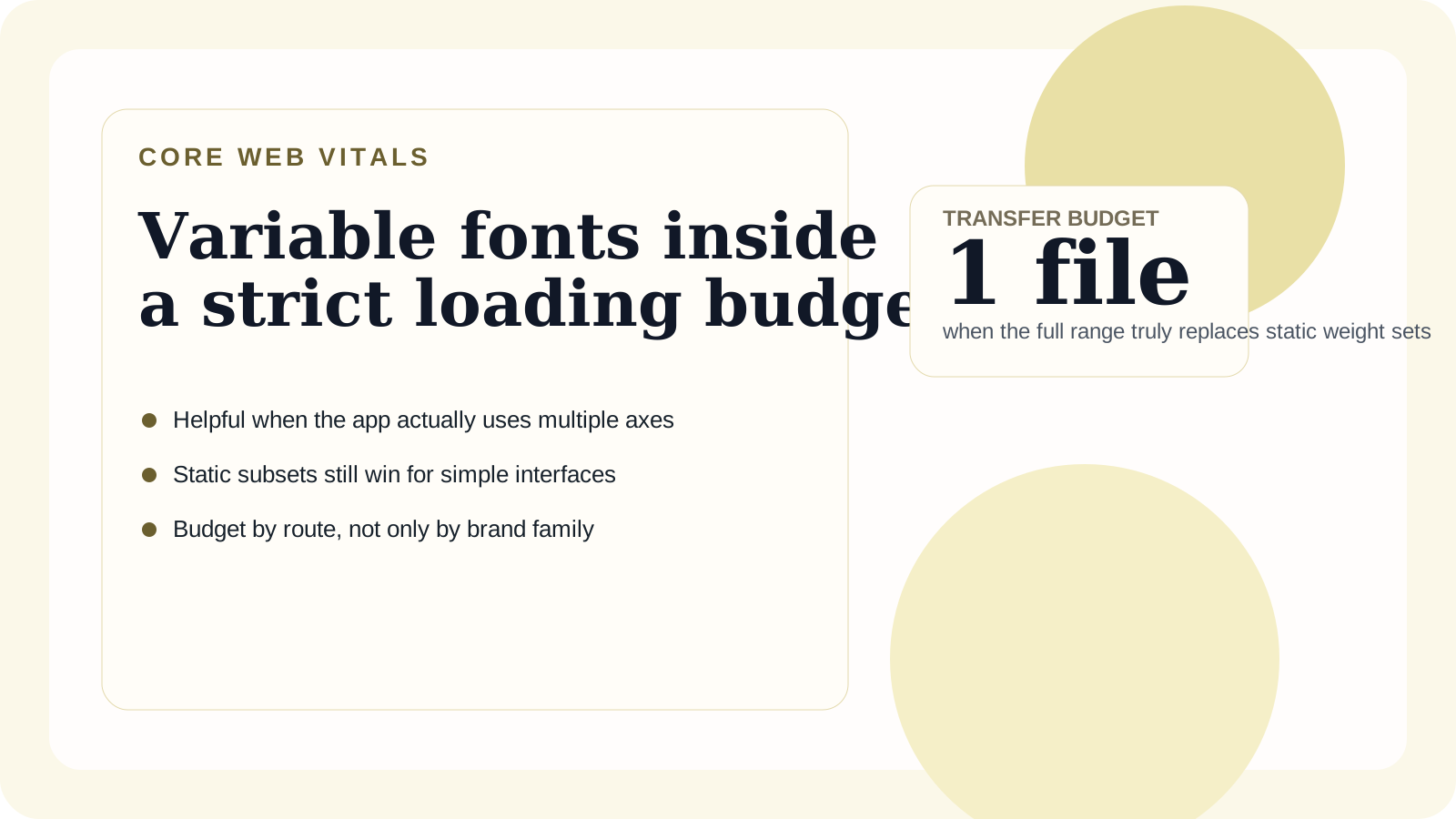
Variable fonts are often pitched as an automatic win: one file, fewer requests, faster loading. The reality is narrower. They help most when the product genuinely uses multiple weights or widths within the same experience and can replace several static files with one controlled asset.
Where variable fonts pay off
A variable font is strongest when brand voice depends on a flexible range of weights, or when product UI and marketing pages share the same family. In that case, one asset can simplify delivery and reduce the odds of invisible fallback mismatches between routes.
The performance gain is less convincing when the app only needs regular and semibold text. A carefully subset static setup can still be smaller and easier to reason about, especially if the variation axes are mostly unused.
Decision table
| Scenario | Variable font fit | Why |
|---|---|---|
| Product and marketing share one flexible family | Strong | Reduces asset sprawl and keeps rendering consistent |
| App uses only 2 static weights | Weak to moderate | Static subsets may be smaller and simpler |
| Brand relies on width or optical-size variation | Strong | Variable axes support the design system directly |
| Low-end devices dominate traffic | Mixed | Test CPU and rendering behavior, not only bytes |
The key is to budget based on what is actually rendered above the fold. A variable file that carries unused axes is not automatically efficient.
The budget rule that keeps teams honest
Set a route-level font budget instead of a global one. For example, allow the homepage and article template to consume different typography budgets because their jobs are different. Then decide whether the variable asset stays within those limits after preloading, subsetting, and fallback styling are accounted for.
Also test the brand question honestly. If moving to a variable font means the team can stop shipping separate display and UI families, the performance story gets much stronger because the simplification extends beyond a single file.
Recommendation
Use variable fonts when they replace real complexity, not hypothetical complexity. If one asset can cover several weights or responsive states your product already uses, they are often worth it. If your interface is typographically simple, static subsets may still be the cleaner solution.
For teams making the hosting decision at the same time, CDN vs self-hosted fonts is the next step because delivery strategy can either amplify or erase the gains from the file format itself.