Multilingual Typography Systems: Best CJK + Latin Pairings for Product Interfaces
How to choose CJK and Latin pairings that feel coherent in product UI, with a focus on texture, scale balance, and fallback behavior.
- Mapped pairing criteria for mixed-script interfaces beyond simple family matching, including texture and fallback behavior.
- Organized practical CJK plus Latin selection rules for UI components, dashboards, and localized marketing modules.
On this page
Mixed-script interfaces break visual harmony faster than monolingual ones because readers compare more than brand tone. They compare perceived density, rhythm, punctuation spacing, and the way Latin numerals sit inside CJK text. A pairing can look acceptable in a heading mockup and still feel uneven in tables, sidebars, or menus.
What makes a pairing feel coherent
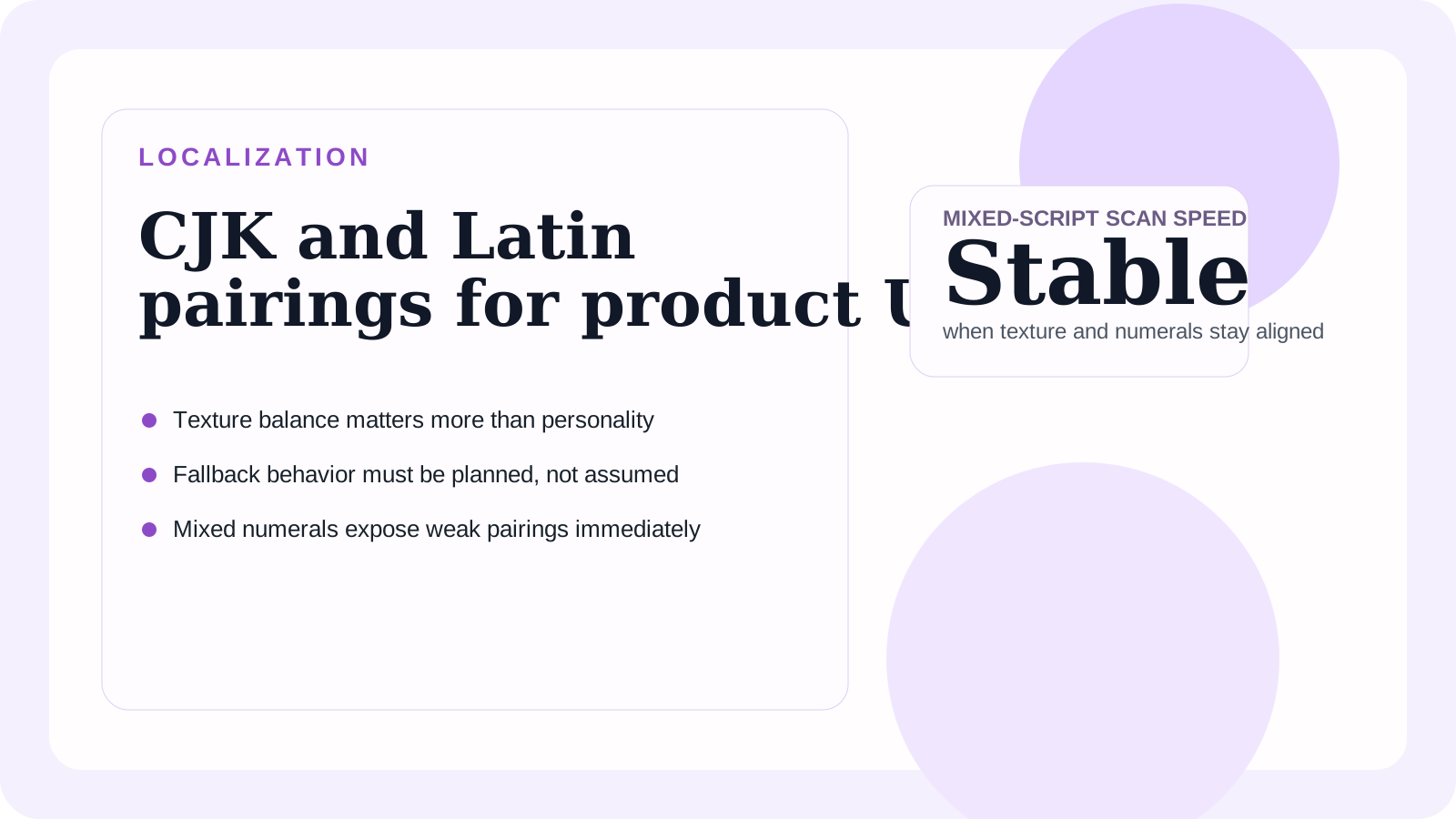
The best pairings share visual texture before they share personality. Start with x-height balance, stroke modulation, and darkness on the page. If the Latin side is light and airy while the CJK side is dense and dark, the interface feels patched together. This is especially obvious in navigation, metric cards, and mixed-script search results.
Fallback behavior matters just as much. Teams often select one polished Latin family and one CJK companion, then overlook what happens when the platform swaps to a fallback for a missing glyph range. That mismatch creates abrupt changes in rhythm inside the same screen.
Pairing criteria that matter in UI
| Criterion | Why it matters | What to inspect |
|---|---|---|
| Texture balance | Prevents one script from feeling heavier than the other | Mixed paragraph samples, not isolated headings |
| Numeral compatibility | Keeps prices, dates, and metrics stable | Tables, analytics cards, receipts |
| Punctuation behavior | Avoids awkward spacing around symbols | Search bars, tags, breadcrumbs |
| Fallback discipline | Maintains consistency across devices | Missing glyph tests and OS-specific rendering |
A good pairing remains unremarkable in the best sense. Users should notice the content, not the negotiation between scripts.
A product-team workflow
Build one test page that includes dashboard cards, table cells, side navigation, empty states, and form labels in both scripts. Then evaluate contrast, line breaks, and rhythm at the component level. This catches issues that specimen sheets miss, especially when Latin abbreviations or numerals appear inside CJK labels.
It also helps to define one primary pairing and one fallback pairing per locale group. That reduces improvisation during localization sprints and gives engineering a clear implementation map.
Recommendation
Choose CJK and Latin pairings based on functional texture, not only brand resemblance. The safest system is one that stays visually calm in mixed sentences, data tables, and short UI labels. If the pairing survives those states, it can usually support marketing surfaces too.
Teams balancing multiple scripts should also review web typography best practices so multilingual decisions stay aligned with spacing, contrast, and responsive sizing.