Brand Style System Governance: Typography Tokens That Scale Across Teams
A governance model for typography tokens that keeps campaigns flexible while reducing ad hoc overrides across product, marketing, and editorial work.
- Synthesized token governance patterns that reduce drift without forcing every team into the same page template.
- Separated durable semantic token rules from campaign-level expression rules for headings and emphasis.
On this page
Typography governance fails when tokens are either too generic or too prescriptive. If every text style is named only by size, teams invent meaning on top of it. If every token is tied to a single page pattern, the design system becomes rigid and marketers start bypassing it.
The governance model that scales
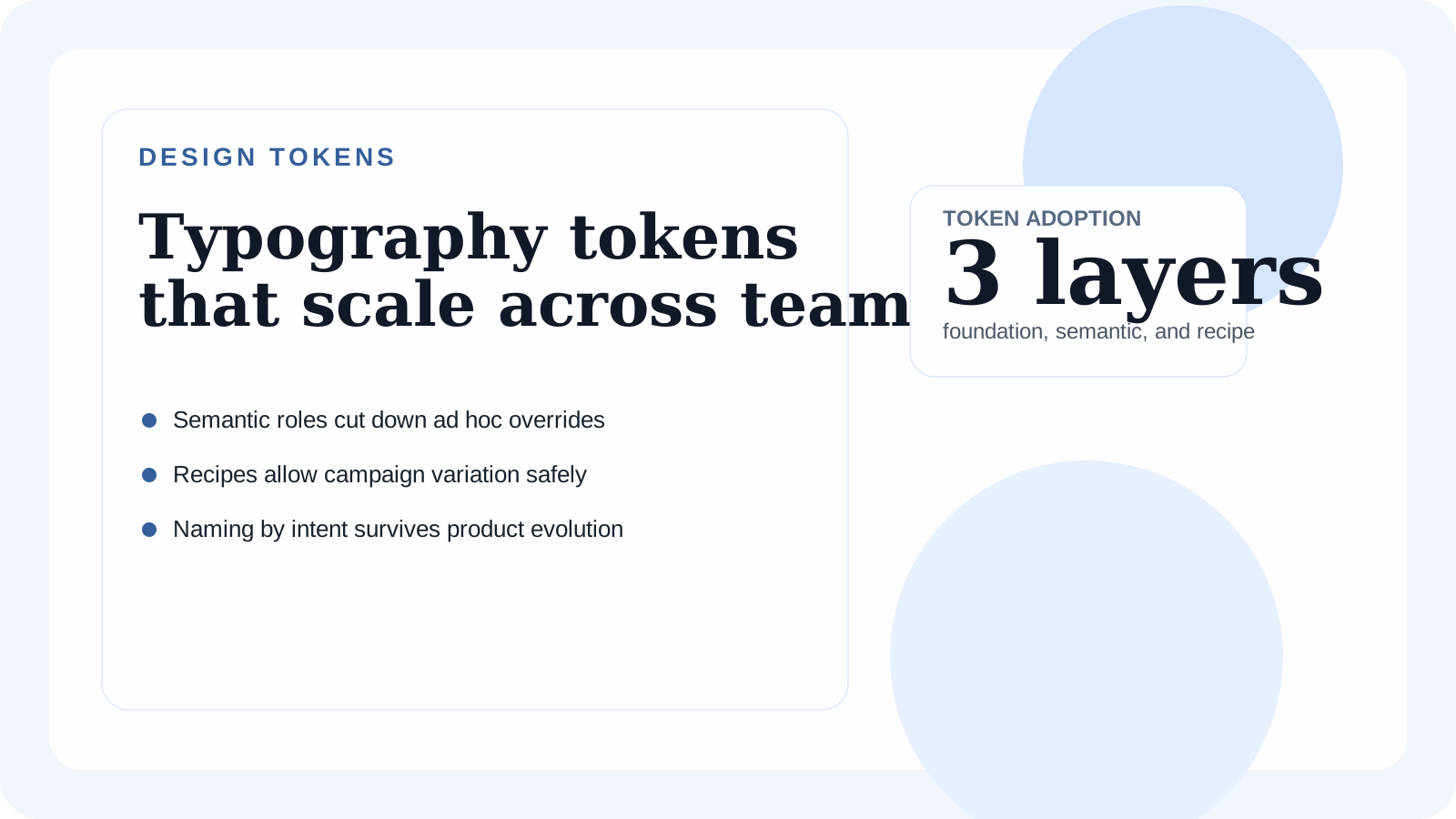
The most reliable structure is a three-layer model: foundation tokens, semantic tokens, and page-level recipes. Foundation tokens define measurable values such as font family, weight, line height, and tracking. Semantic tokens define roles such as heading.hero, body.default, or label.quiet. Recipes document how those roles combine inside a page type or component family.
This keeps teams aligned without pretending every experience should look identical. A launch campaign can use a more dramatic hero treatment while still inheriting the same body, caption, and legal copy rules as the rest of the system.
Token layers and responsibilities
| Layer | Owns | Should not own | Governance goal |
|---|---|---|---|
| Foundation | Font family, size scale, weight, line height | Page-specific meaning | Stability and maintainability |
| Semantic | Text roles such as heading, body, label | Campaign layout instructions | Consistent usage across products |
| Recipe | Module-level combinations and exceptions | New core typography values | Controlled flexibility |
What breaks most systems is allowing recipes to invent new foundations. Once a marketing page adds a custom weight and two bespoke tracking values, the exception becomes the new baseline by accident.
Review rules worth formalizing
Document which teams can create new semantic roles and under what conditions. In most organizations, new roles should require repeated evidence across multiple surfaces, not one campaign request. Also define an override path that expires. Temporary launch styles are fine as long as they do not quietly remain in the token catalog forever.
The other key rule is naming discipline. Prefer names that describe intent, not platform. A token called text-dashboard-small becomes obsolete immediately; label.compact survives as products evolve.
Recommendation
Govern typography tokens like infrastructure. The goal is not to prevent variation. The goal is to make variation explicit, reviewable, and reversible. A small set of durable semantic roles usually supports more creativity than a sprawling library of one-off styles because teams spend less time negotiating basics.
If you are still defining the visual hierarchy behind those roles, review web typography best practices before you freeze token names.